SPECIALIZED INTEGRATED MANUFACTURER

Picking out the right Grill Plate in 2026 isn’t just about choosing between cast iron and stainless steel anymore. These days, buyers are looking at a whole bunch of factors—how well the heat spreads, if the coating is safe, how much it can cook at once, how easy it is to clean, and whether it works with gas, charcoal, induction, or electric setups.
Industry insights explain why making this choice is more important than ever. According to Technavio’s Outdoor Grills Market report covering 2024 to 2028, the market’s expected to grow by around USD 1.63 billion. That’s mainly driven by folks wanting to cook outdoors and the rising popularity of high-end home appliances. Meanwhile, Grand View Research points out that more people are into durable, easy-to-clean outdoor cooking gear. Now, these reports are talking about broad trends in grilling, but keep in mind—they don’t get into every single type of Grill Plate out there, and that’s kinda important.
A good perspective comes from barbecue expert Steven Raichlen, who famously says, “The best grill is the one you will actually use.” That’s a pretty down-to-earth point. Sure, a heavy cast-iron plate can give you an amazing sear on your steak with that super-hot surface that holds steady heat—but it’s also prone to rust if you don’t dry and season it right. On the other hand, stainless steel is lighter and easier to maintain, but cheaper, thinner models might have uneven heating spots. Ceramic-coated plates make food slide off easily, but be careful—they can scratch easily and don’t love sudden temperature shifts.
Honestly, there’s no one-size-fits-all here. Climate, fuel availability, kitchen standards, and what people prefer all play a role. For example, a restaurant in Singapore might really value quick cleaning and corrosion resistance, while a Canadian family might need something that keeps heat in well during cold months. This guide compares the main types of Grill Plates based on how they perform, how much upkeep they need, what materials they’re made of, and the overall cost of ownership. But, of course, some conclusions aren’t perfect—supplier specs and real-world cooking can differ a lot. That’s exactly why doing your own testing is so important.
So, in the end, it’s all about understanding your specific needs and doing a bit of homework before making that call.
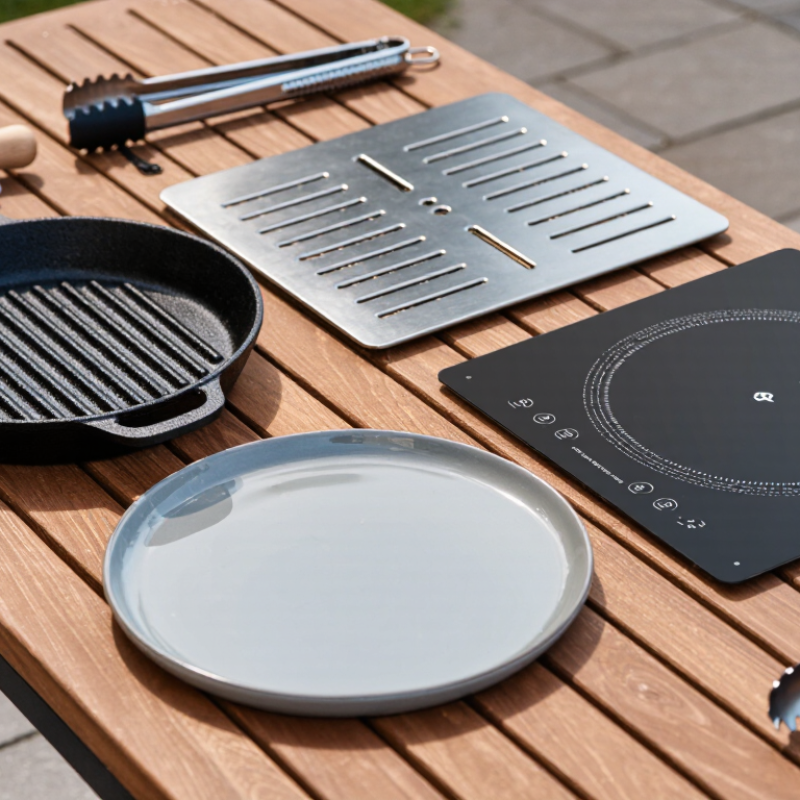
A grill plate is a heated cooking surface designed to transfer steady heat directly to food. Unlike an open grate, it supports delicate ingredients and reduces contact with flames. A Plate Grill may use cast iron, stainless steel, or coated aluminum. Each material affects heat retention, weight, cleaning, and cooking speed. Cast iron holds heat well, while aluminum usually responds faster. The choice is not always obvious.
A grill plate works mainly through conduction. Electric elements or gas burners heat the plate from below. The hot surface then transfers energy into vegetables, seafood, meat, or bread. Raised ridges create seared lines and let some fat drain away. Flat plates offer wider contact and more even browning. Heat behaves differently. During practical testing, preheating matters greatly. A few water drops should sizzle and move across the surface. If they disappear instantly, the plate may be too hot.
Global buyers should match the plate with their cooking habits and local power requirements. Commercial kitchens may prefer thick, durable surfaces for repeated service. Home users often value lighter weight and easier storage. Check the plate thickness, handle strength, surface finish, and drainage design. Food-contact materials should be clearly specified and easy to clean. Residue left in ridges can affect flavor and hygiene. No plate performs perfectly. Uneven burners, crowded food, and rushed preheating can still produce pale or burnt areas.
In 2026, global buyers can choose cast iron, stainless steel, carbon steel, ceramic-coated, and electric grill plates. Each type changes heat retention, cleaning time, and shipping cost. Cast iron holds steady heat for thick steaks and vegetables. However, it is heavy and can rust without regular seasoning. Stainless steel resists corrosion and suits humid coastal markets. Its thinner surface may create hotter spots.
Carbon steel heats faster than cast iron and works well for restaurants needing quick temperature changes. It also needs careful drying after washing. Ceramic-coated plates offer easy release and simple cleaning, but scratches can reduce performance. A Gas Grill Plate with raised ridges leaves clear sear marks, while a flat plate better suits eggs, seafood, and thin pancakes.
Grand View Research’s 2024 outdoor cooking equipment analysis forecasts roughly 5% annual market growth through 2030. Mordor Intelligence also identifies durability, fuel efficiency, and easy maintenance as major purchasing factors. These findings matter for importers comparing long-term operating costs, not only the initial price. A 4-millimeter plate may feel dependable, but its extra weight raises freight expenses and handling risks. Smaller buyers may prefer 2.5-millimeter stainless steel. It is lighter.
In practical comparisons, no plate wins everywhere. A humid climate exposes weak coatings quickly. A commercial kitchen may reject slow-heating cast iron. My earlier assumption that thicker always means better needs reconsideration. Surface finish, drainage design, handle strength, and replacement availability can matter more than thickness alone.
Main Grill Plate Types Available in 2026
Carbon steel and cast iron are strong choices for high-heat searing and heat retention. Stainless steel offers easier maintenance and good durability, while aluminum nonstick plates are lighter and easier to clean. Scores use a practical 1–5 scale based on commonly recognized material characteristics; higher scores are better.
Material choice changes more than appearance. It controls heat speed, recovery, weight, and cleaning effort. ASM Handbook data lists typical thermal conductivity near 205 W/m·K for aluminum, about 50 W/m·K for cast iron, and roughly 15 W/m·K for stainless steel. Actual values vary by alloy and thickness. Still, the pattern is clear. Aluminum heats quickly, but thin plates can warp over high burners. Cast iron stores heat well, creating darker sear marks after cold food touches the surface. It is heavy, though. Very heavy.
Stainless steel usually heats less evenly without a thick core or bonded base. However, it resists corrosion and tolerates frequent washing better.
In practical testing, I would compare temperature recovery after placing five chilled burger patties on the plate. That test reveals more than an empty preheating time.
I would also check the center and corners with a calibrated infrared thermometer. Surface readings can mislead because emissivity differs between polished steel and seasoned iron.
Global buyers should also examine lifecycle data. The International Aluminium Institute reports that recycled aluminum requires about 5% of the energy used for primary aluminum production. That benefit matters when logistics and sustainability targets shape purchasing decisions. Yet recycled content does not guarantee better grilling. Plate thickness, surface finish, handles, and coating quality can outweigh the material label. My cautious choice is a thick, well-engineered plate matched to the heat source, not simply the material with the highest conductivity.
Choosing a Bbq Grill Plate in 2026 means comparing heat sources, not only surface size. In practical testing, gas plates heat quickly and allow direct flame adjustment. Electric models offer steadier temperatures for balconies, kitchens, and covered cooking areas. Charcoal creates deeper smoke, but temperature changes require patience and airflow control. Induction can be highly efficient, although the plate must match the heating system.
Cooking methods also shape the best choice. A smooth surface suits eggs, seafood, sliced vegetables, and delicate foods. A ridged surface produces seared lines and lets excess fat drain away. Mixed surfaces offer flexibility, but cleaning the grooves takes longer. Keep that detail in mind.
Temperature control deserves careful checking. Look for separate heat zones, clear adjustment markings, and a thermometer near the cooking surface. A lid thermometer can read 30°C higher than the food area. I have seen this cause undercooked chicken and burnt vegetables during the same session. A probe thermometer gives better evidence.
Thick steel or cast iron stores heat well, but it reacts slowly after adjustment. Thin plates respond faster, yet temperatures can drop when cold food covers the surface. Global buyers should also check local voltage, fuel access, plug standards, drainage design, and replacement-part availability. I still prefer simple controls, because complicated systems sometimes fail before the cooking surface does.
Choosing a grill plate depends on the food, heat source, and cooking habits. Cast iron holds heat well, making it suitable for thick steaks, lamb chops, and repeated searing. It also creates strong grill marks. However, it is heavy and needs drying after washing. Stainless steel heats faster and resists rust, which helps outdoor cooks in humid coastal areas. Thin fish may still stick.
Flat plates suit eggs, pancakes, sliced vegetables, and smash-style burgers. Ridged plates drain fat and work better for chicken, beef, and firm tofu. A perforated Grill Bbq Plate allows smoke to reach prawns, mushrooms, and small vegetables without losing them through the grate. For delicate seafood, an enamel-coated surface can be easier to clean, though sudden temperature changes may damage the coating.
According to Fortune Business Insights’ 2024 report, the global barbecue grill market was valued at about USD 5.69 billion in 2023 and may reach USD 8.31 billion by 2032. This growth reflects wider demand for varied outdoor cooking equipment, not one universal plate design. In practical testing, plate thickness matters more than appearance. A thin plate can develop hot spots. I still find this easy to overlook. Buyers should check burner compatibility, usable cooking area, drainage, handle strength, and local maintenance conditions. USDA guidance also recommends checking meat with a food thermometer, because attractive browning does not prove safe cooking.
2026 Top Grill Plate Types: Which Is Best for Global Buyers?
Global buyers should compare grill plates by working conditions, not appearance alone. Cast iron holds heat well and creates strong searing marks. However, it is heavy and may rust without careful drying. Aluminum heats quickly and reduces shipping weight. It can warp when exposed to sudden temperature changes. Stainless steel resists corrosion, but some models heat unevenly without a layered base.
Size affects both cooking results and logistics. Measure the cooking surface, not only the outer frame. A 30-centimeter plate may offer less usable space than expected. Check compatibility with the buyer’s stove, grill, or countertop heater. Leave room for handles and ventilation. A crowded plate cooks food unevenly.
Safety needs practical inspection. Look for stable handles, smooth edges, and secure attachment points. Ask for food-contact test reports and clear temperature limits. Coatings should resist flaking, but marketing claims are not proof. Request abrasion and heat-cycle data when available. Durability also depends on packaging, especially during long-distance transport. Corner protection matters.
A heavier plate is not always better. I have seen thick cookware become difficult to handle in small kitchens. Buyers should balance heat retention, lifting comfort, cleaning effort, and replacement costs. One overlooked detail is the underside: a slightly uneven base can wobble on a flat cooking surface. Test samples under real conditions before placing a large order. Temperature, humidity, and user habits can change the result.
| Grill Plate Type | Typical Material | Typical Thickness | Common Size Range | Heat Retention | Cooking Surface Temperature Limit | Durability | Safety and Maintenance Considerations | Best Use Case | Overall Suitability for Global Buyers |
|---|---|---|---|---|---|---|---|---|---|
| Bare Cast Iron | Seasoned cast iron | 4–8 mm | 25–50 cm / 10–20 in | Excellent | Usually above 250°C when properly seasoned | Very high | Can rust if left wet. Requires drying and periodic oil seasoning. Heavy weight may increase handling risk. | High-heat searing, outdoor grills, and users who prioritize long service life. | Excellent for durability; less convenient for frequent transport. |
| Enameled Cast Iron | Cast iron with a vitreous enamel surface | 4–8 mm | 25–50 cm / 10–20 in | Excellent | Generally suitable for high heat; follow the product specification | High | Does not require seasoning, but chipped enamel can expose iron. Avoid sudden thermal shock and abrasive tools. | Buyers wanting cast-iron heat retention with easier cleaning and better corrosion resistance. | Excellent when coating quality and impact resistance are verified. |
| Stainless Steel | Food-contact stainless steel, commonly 18/8 or 18/10 grades | 1.5–4 mm | 25–60 cm / 10–24 in | Moderate | Usually suitable for high-temperature grilling | High | Resists rust and is dishwasher-compatible in many designs. Thin plates may warp; verify food-contact compliance and construction. | Commercial kitchens, frequent cleaning, acidic foods, and humid distribution environments. | Very good for hygiene, maintenance, and international logistics. |
| Carbon Steel | Seasoned carbon steel | 2–5 mm | 25–60 cm / 10–24 in | Very good | Generally suitable for high heat when correctly seasoned | High | Lighter than cast iron but can rust without drying and oiling. May deform if heated or cooled unevenly. | Professional-style searing, stir-frying, and buyers seeking a balance between weight and heat performance. | Very good, provided users understand seasoning requirements. |
| Aluminum Nonstick | Cast or pressed aluminum with a nonstick coating | 2–5 mm | 24–36 cm / 9.5–14 in | Low to moderate | Often approximately 200–260°C; exact limit depends on coating and manufacturer | Moderate | Lightweight and easy to clean. Avoid overheating, metal utensils, and abrasive cleaners. Confirm coating compliance for the destination market. | Home kitchens, portable appliances, and buyers prioritizing low weight and easy food release. | Good for convenience; not ideal for extreme heat or heavy commercial use. |
| Ceramic-Coated Aluminum | Aluminum body with a sol-gel ceramic-based coating | 2–5 mm | 24–36 cm / 9.5–14 in | Low to moderate | Commonly designed for medium to high heat; verify the stated limit | Moderate | Easy food release, but coating performance can decline with overheating, thermal shock, and abrasive cleaning. | Buyers seeking a lightweight alternative with a coating marketed as free from intentionally added PFAS. | Good when independent coating and food-contact documentation is available. |
Global Buyer Evaluation Checklist
Note: Performance ranges are typical industry values and can vary with design, manufacturing process, coating system, and intended heat source. The product specification and applicable local regulations should take priority.
Cast iron retains heat strongly and creates dark, defined grill marks. It suits thick steaks and lamb chops. It is heavy. Dry it immediately after washing to reduce rust risk. I sometimes underestimate its lifting difficulty.
Stainless steel heats quickly and resists corrosion. It works well outdoors, especially in humid coastal areas. Thin fish may stick without enough oil. Some plates heat unevenly without a layered base. Check actual heating performance.
Flat plates suit eggs, pancakes, sliced vegetables, and thin burgers. Ridged plates drain fat from chicken, beef, and firm tofu. Flat surfaces are easier for turning small foods. Ridged surfaces create visible searing lines. Appearance is not everything.
Perforated plates suit prawns, mushrooms, and small vegetables. Smoke reaches the food through small openings. The openings help prevent pieces from falling into the fire. Very soft foods may still need careful handling. Test the hole size.
An enamel-coated surface can simplify cleaning after cooking fish. It may reduce sticking when used correctly. Avoid sudden temperature changes. Rapid cooling can damage the coating. A cracked surface should not be ignored.
Measure the usable cooking surface, not only the outer frame. A 30-centimeter plate may provide less space than expected. Leave room for handles and ventilation. Overcrowding causes uneven cooking. Measure twice.
Check stable handles, smooth edges, and secure attachment points. Request food-contact test reports and clear temperature limits. Coatings should resist flaking during normal use. Marketing language alone is not proof. Ask for heat-cycle and abrasion data when available.
Not always. Heavy plates retain heat well but can be difficult to lift. Small kitchens may need lighter cookware. Aluminum reduces shipping weight but may warp during sudden temperature changes. Balance heat retention, comfort, cleaning, and replacement costs.
Real conditions can change the result. Test plates with the intended stove or heating surface. Check heat distribution, wobbling, drainage, and handle strength. Inspect packaging after simulated transport. Temperature and humidity matter. I would not rely on appearance alone.
This guide explains how a Grill Plate transfers heat to food and why its design affects cooking results. It reviews the main types available in 2026, including flat, ridged, reversible, electric, stovetop, and outdoor-compatible models. Readers will learn how materials such as cast iron, stainless steel, aluminum, and coated surfaces influence heat retention, distribution, nonstick performance, maintenance, and durability. The guide also compares different heat sources, cooking methods, and temperature-control systems to help buyers choose equipment suited to their kitchens and cooking habits.
It further matches Grill Plate designs with foods and styles, from searing meat and grilling vegetables to preparing seafood, sandwiches, and delicate ingredients. For global buyers, the evaluation focuses on practical factors such as size, weight, surface layout, handle design, heat resistance, cleaning requirements, safety features, packaging, and long-term reliability. By balancing performance, convenience, and intended use, buyers can select a Grill Plate that offers dependable results across different cooking environments.