DAFEIT
over 100,000 square meters

SPECIALIZED INTEGRATED MANUFACTURER

Leave Your Message
0%

Choosing the Best Pancake Pan for Wholesale begins with a practical question: who will use it, and how often?

A wholesale buyer must assess more than appearance. Restaurants need fast heat recovery, steady browning, and handles that remain comfortable during long breakfast services. Retail customers may value lighter weight, easy cleaning, and attractive packaging. A reliable Pancake Pan should spread heat evenly across the cooking surface. Thin spots can create pale centers and burnt edges. That small defect becomes expensive when hundreds of customer reviews repeat it.

Cookware specialist and chef Michael Ruhlman offers a useful principle: “A pan should reward consistency, not hide inconsistency.” This idea matters in wholesale purchasing. Buyers should compare aluminum, cast iron, stainless steel, and coated surfaces under realistic conditions. Test several batches of pancakes. Check whether the first pancake differs sharply from the tenth. Measure handle balance, surface durability, and storage efficiency. Do not trust a glossy sample alone.

Performance comes first.

Still, no selection is perfect. A heavy cast-iron Pancake Pan may retain heat beautifully, yet frustrate kitchens with limited storage or weaker staff. A coated model may release batter smoothly, but its finish can suffer from careless utensils. Even packaging deserves review. A damaged edge or unclear care label can create avoidable returns.

The strongest wholesale decision combines product testing, supplier transparency, and honest cost analysis. Request material details, production samples, warranty terms, and consistent batch specifications. Compare the landed price, not merely the factory quote. A cheaper pan can become costly after replacements, complaints, and slow service. This guide examines those trade-offs, helping buyers choose a Pancake Pan that performs beyond the showroom.
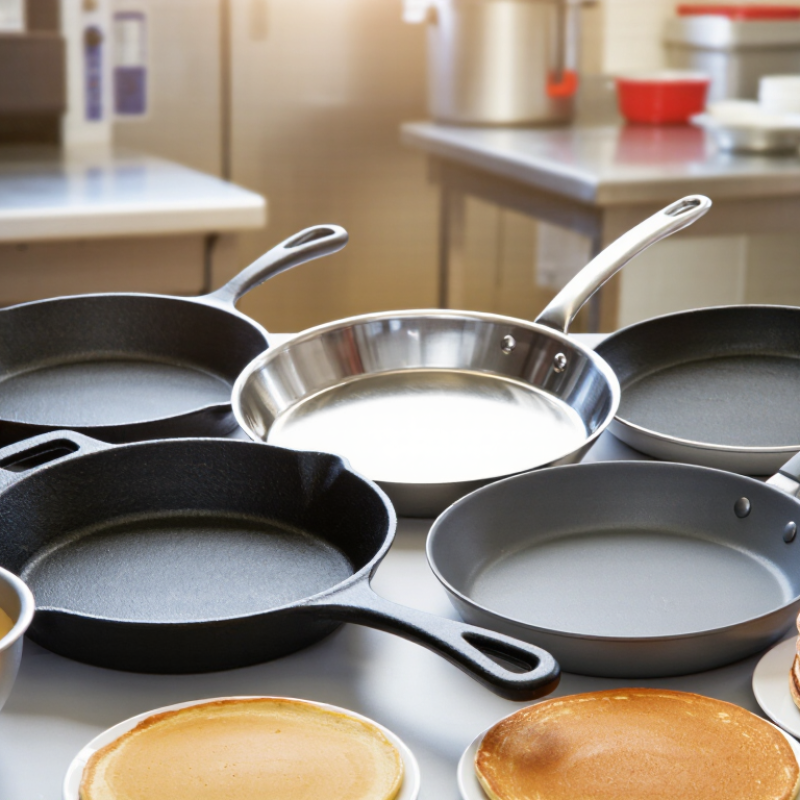
How to Choose the Best Pancake Pan for Wholesale?

Define Wholesale Pancake Pan Requirements and Buyer Priorities

Choosing the best pancake pan for wholesale begins with a clear buyer profile. Define the intended users, cooking volume, and sales channel before comparing products. A café may need a durable Flat Pancake Pan for continuous breakfast service. A homeware distributor may prioritize attractive packaging and manageable shipping weight. Record the required diameter, wall thickness, handle style, surface finish, and compatible cooktops. Small details matter. A two-millimeter size difference can affect packaging and storage.

Wholesale buyers should evaluate performance through measurable checks. Test heat distribution across the center and edges. Inspect the handle after repeated heating and cooling cycles. Review coating consistency, rim alignment, base flatness, and carton protection. Ask suppliers for material specifications, inspection records, sample approval procedures, and production lead times. Food-contact suitability should be supported by reliable documentation for the target market. Do not judge quality from one attractive sample. The first sample may perform well, while later batches reveal uneven finishing. That possibility deserves attention.

Tips: Set acceptance standards before ordering. Compare three samples under the same cooking conditions. Measure surface temperature differences, not only appearance. Request photos from mid-production inspections. Confirm replacement terms for damaged cartons or failed inspections. Keep a written product specification. It prevents vague promises from becoming costly misunderstandings. One useful improvement is allowing a small pilot order before committing to full volume. This adds time, but it may expose problems earlier. Bulk pricing is important, yet stable quality usually protects buyer trust better.

Compare Pancake Pan Materials, Coatings, and Heat Performance

For wholesale pancake pans, material choice affects heating speed, durability, and customer experience. ASM Handbook, Volume 2, reports thermal conductivity near 205 W/m·K for aluminum, compared with about 16 W/m·K for stainless steel. This difference matters on a busy breakfast line. Aluminum usually heats faster and spreads heat evenly. Stainless steel offers stronger surface durability, but often needs an aluminum core. Cast iron stores heat well, though it can feel heavy and respond slowly to temperature changes.

Coatings deserve equal attention.
A smooth PTFE or ceramic coating can reduce sticking and shorten cleaning time. However, coating quality depends on thickness, curing, edge coverage, and repeated heating. U.S. FDA regulations, including 21 CFR 175.300, require suitable documentation for certain food-contact coatings. Ask suppliers for migration-test records, coating specifications, and abrasion results. I would not judge a pan by its first-use shine. Wholesale buyers should test pancakes after repeated washing, because early performance can be misleading.

Tip: Compare identical batter portions across three heat settings. Record preheating time, center color, edge browning, and release quality. Also check flatness after thermal cycling. According to ASM material data, conductivity varies by alloy and construction, so catalog numbers alone cannot predict results. Induction users need a magnetic base. That detail is easy to miss. For bulk purchasing, request samples from different production batches. One sample may look perfect, while consistency remains uncertain.

Evaluate Pan Sizes, Shapes, and Cooking Surface Designs

Wholesale buyers should evaluate pan dimensions before chasing decorative features. A 10- to 12-inch Pancake Grill Pan suits standard household portions and fits common cooktops. Smaller 8-inch pans reduce batter waste but slow high-volume service. Larger 14-inch models improve output, yet they need stronger handles and wider storage shelves. Grand View Research valued the global cookware market at approximately USD 19.5 billion in 2023, showing why practical assortment planning matters.

Shape affects consistency. Round pans support even turning and familiar portion control. Rectangular pans create more cooking space, but corner temperatures may vary on smaller burners. Test the pan with three pancakes, not one. A single pancake can hide uneven heating. Compare aluminum, steel, and layered constructions through repeated heating cycles. Record heat-up time, edge browning, and handle temperature.

The cooking surface deserves closer inspection. A smooth, low-friction surface releases batter cleanly and simplifies cleaning. Shallow texture can improve grip, but deep grooves may create pale lines or trap residue. Market research from Fortune Business Insights projects continued cookware growth through 2032, increasing pressure for durable, repeatable designs. Ask suppliers for abrasion testing and coating performance data. Claims alone are not enough. I would also inspect five units from one production batch. Small warping sometimes escapes a single sample review. A perfect universal pan does not exist; the best wholesale choice balances size, shape, surface behavior, packaging efficiency, and expected kitchen habits.

How to Choose the Best Pancake Pan for Wholesale?

Estimated production capacity by pan size, shape, and cooking-surface design.

The planning estimates assume one pan, one operator, continuous cooking, and typical cycle times of 2.5–5 minutes. Multi-cavity pans offer higher hourly output, while larger flat round pans provide greater flexibility for different pancake sizes and recipes. Shallow, evenly heated surfaces are generally easier to clean and more suitable for broad wholesale use.

Check Handle Safety, Durability, and Ease of Commercial Use

Choosing the best Griddle Pancake Pan for wholesale requires more than checking diameter and price. Handle safety matters during fast breakfast service. Look for a cool-touch grip, secure rivets, balanced weight, and enough clearance from the hot surface. A wet or greasy handle can twist unexpectedly. Test it with one hand.

Durability affects every shift. The FDA Food Code 2022, Section 4-101.11, requires food-contact equipment to be durable, smooth, corrosion-resistant, and easy to clean. Select pans with stable bases, strong handle joints, and surfaces resistant to pitting or flaking. Ask for heat-cycle, dishwasher, and warping test data. A thick base may heat slowly, but it usually holds temperature better across repeated batches.

Commercial ease also protects labor budgets. The National Restaurant Association’s 2024 State of the Restaurant Industry report projected nearly 1 trillion dollars in U.S. restaurant sales, while operators continued facing cost pressure. A pan that stacks neatly, cleans quickly, and works across the kitchen’s heat sources can reduce small delays. Check oven limits, storage space, and lifting comfort before placing a bulk order. My practical concern is simple: a handle can feel firm in a showroom yet loosen after months of service. Request samples, inspect the joints after repeated use, and record staff feedback. Perfect specifications do not replace real kitchen testing.

Assess Manufacturing Quality, Certifications, and Supplier Reliability

Choosing the best Pancake Skillet Pan for wholesale starts with manufacturing quality, not appearance. During factory checks, inspect the cooking surface under bright light. It should look even, without bubbles, pits, or rough edges. Place the pan on a flat table. Any rocking may indicate a distorted base.

Ask how the handle is attached and tested. A loose handle creates returns and safety concerns. Check the pan’s weight, wall thickness, heat distribution, and coating adhesion through documented tests. Food-contact materials should have relevant laboratory reports for your target market. Certifications such as ISO 9001 can show process control, but they do not prove every pan is excellent. Read the scope and expiry date carefully. Certificates can be misunderstood.

Supplier reliability needs practical evidence. Request production samples from different batches, not one perfect unit. Compare color, flatness, packaging, and handle strength. Review traceability records, inspection standards, and corrective-action reports. A dependable supplier should explain what happens when defects appear. Visit the facility if possible, or use an independent inspection service before shipment.

I once trusted a polished sample too quickly. The bulk shipment showed uneven coating. That mistake was expensive.

Ask for clear tolerances, replacement terms, lead-time records, and capacity details. Keep communication written. Small unanswered questions often become larger wholesale problems. Also, test packaging after a short drop simulation. A strong pan is less useful if its rim arrives scratched.

Calculate Wholesale Costs, Order Quantities, and Long-Term Value

How to Choose the Best Pancake Pan for Wholesale?

Wholesale pancake pan selection should begin with landed cost, not unit price. Include the pan, packaging, freight, duty, inspection, storage, and expected defects. For example, a $6 pan may reach $8.40 after logistics and handling. A 5% defect allowance raises the practical cost to about $8.84 per saleable unit.

Grand View Research estimated the global cookware market at approximately $19.6 billion in 2023, with steady growth expected through 2030. That growth creates opportunity, but also makes careless inventory expensive.

Order quantities should match sales evidence. Calculate monthly demand, supplier lead time, and safety stock before accepting a large minimum order. A simple model works: monthly sales × lead-time months, plus 10–15% safety stock.

Test 100–300 units first when possible. Measure coating durability, heat distribution, handle strength, and return rates. One overlooked detail is carton size. Larger packaging can quietly increase freight costs. The best specification may not be the cheapest one.

Tips:

Compare at least three landed-cost quotations. Request sample testing on gas, electric, and induction surfaces. Record pan weight and base thickness. Review defects after 30 days, not only at delivery.

A heavier pan may sell better, but not always. Recheck the numbers quarterly because freight and material costs change. Industry reports provide direction, yet your own reorder data should control the final decision.

FAQS

What should wholesale buyers define before choosing pancake pans?

Define the users, cooking volume, sales channel, diameter, wall thickness, handle style, and cooktop compatibility. Small details matter. A two-millimeter difference can change storage and packaging.

Which materials suit different cooking needs?

Aluminum heats quickly and spreads heat evenly. Stainless steel offers stronger surface durability. Cast iron stores heat well but feels heavier. Construction matters too. A layered base may improve performance.

How should buyers test heat distribution?

Cook identical batter portions at the center and edges. Record preheating time, surface temperature, browning, and release quality. Test three pancakes. One pancake can hide uneven heating.

What coating checks are important for wholesale orders?

Inspect coating thickness, curing, edge coverage, and surface consistency. Ask for food-contact documents, migration tests, and abrasion results. The first shine proves little. Repeat washing may reveal problems.

How can buyers select a practical pan size?

Eight-inch pans reduce batter waste but may slow high-volume service. Ten- to twelve-inch pans suit common portions. Fourteen-inch pans increase output but need stronger handles and more storage space.

Which pan shapes support consistent cooking?

Round pans support familiar portions and easy turning. Rectangular pans provide more space, but corners may heat differently. Check the corners. Use the intended burner during testing.

What should buyers inspect during sample approval?

Check base flatness, rim alignment, handle temperature, coating consistency, and carton protection. Inspect several units from one production batch. One sample is insufficient. Later batches may differ.

Should wholesale buyers place a pilot order first?

A small pilot order can expose defects before full production. Compare samples under identical conditions and record the results. It adds time. It may protect buyer trust and reduce costly surprises.

Conclusion

Choosing the best Pancake Pan for wholesale begins with understanding the buyer’s needs, cooking volume, target market, and budget. Buyers should compare materials, surface coatings, heat distribution, and durability to ensure reliable performance in both household and commercial kitchens. Pan size, shape, weight, and cooking surface design should match the types of pancakes and serving quantities expected, while secure, heat-resistant handles can improve safety and daily usability.

Wholesale buyers should also examine manufacturing consistency, quality control, food-contact suitability, and relevant certifications. A reliable supplier should offer clear product specifications, stable production capacity, reasonable lead times, and responsive communication. Finally, evaluate total costs by considering unit price, minimum order quantity, packaging, shipping, expected lifespan, and replacement frequency. The best Pancake Pan is not always the cheapest option; it is the product that delivers dependable cooking results, practical operation, consistent quality, and strong long-term value.

Olivia

Olivia

Olivia is a dedicated marketing professional at a leading aluminum industry manufacturer, where she brings a wealth of knowledge and expertise in promoting high-quality aluminum alloy ingots, premium kitchen appliances, durable sports and leisure products, and precision automotive parts. With a......
Previous How to Choose the Best Nonstick Cookware for Your Business