Choosing a Covered Casserole Pan in 2026 isn't really about chasing trends—it's about finding a pan that works with your actual meals. Sure, Grand View Research pegged the global cookware market at about $27.1 billion in 2023, and they expect it to keep growing through 2030. But that big-picture number doesn't say much about whether any specific pan is actually good. Still, you know, it kind of explains why shoppers are dealing with way more materials, shapes, and claims than ever before, honestly.
Honestly, the right pan really depends on your own setup—what kind of stovetop you have, how often you use the oven, and how much cabinet space you're working with. Imagine a deep pan full of bubbling tomato sauce, and a lid that doesn't wobble when you shake it. That's the feeling you want. Before you get caught up in how it looks, check the actual usable capacity, whether the handle feels comfortable, how well the lid sits, and what the care instructions say. Small details can make or break it. A heavier pan holds heat beautifully, but when it's full, it can feel like a workout just to lift it. A lighter pan is easier to maneuver, but you might miss that steady, slow-cooking warmth. There's no one-size-fits-all answer—what works in your kitchen might not work in someone else's.
Julia Child—the one and only—once said, “You don’t have to cook fancy or complicated masterpieces; just good food from fresh ingredients.” She wasn’t talking about cookware, exactly, but it’s a solid reminder: pick tools based on what you actually make. So this guide gets into the practical stuff, compares features that matter, and sorts through what product labels can—and can’t—tell you. Some trade-offs are always going to be personal, though. That part? Worth a second look.
Identify the Dishes and Cooking Methods You Plan to Use
Choose the pan for the meals you actually make. Deep, covered dishes such as bean braises, baked pasta, and chicken with vegetables need room for liquid and a lid that fits closely. For lasagna or cornbread-style bakes, a wide, shallower pan encourages more browning. That changes the result. If you plan to brown food on the stovetop before baking, check that the pan and lid are both rated for your cooking method and oven temperature. A heavy pan can hold heat well, but it may feel awkward when full. Capacity matters; so does lifting it safely.
The National Fire Protection Association’s Home Cooking Fires report found cooking equipment involved in 49% of reported U.S. home fires from 2017 to 2021. A stable base and comfortable handles are practical considerations, though no pan alone prevents accidents. For reheated casseroles, USDA Food Safety and Inspection Service guidance recommends reaching 165°F. A simple food thermometer helps verify the center, especially in thick dishes. It is easy to overvalue a large capacity and overlook weight. Picture moving the filled pan from counter to oven, or serving from it at the table. Those small details can shape which casserole pan suits your everyday cooking.
Compare Pan Materials for Heat Retention and Everyday Care
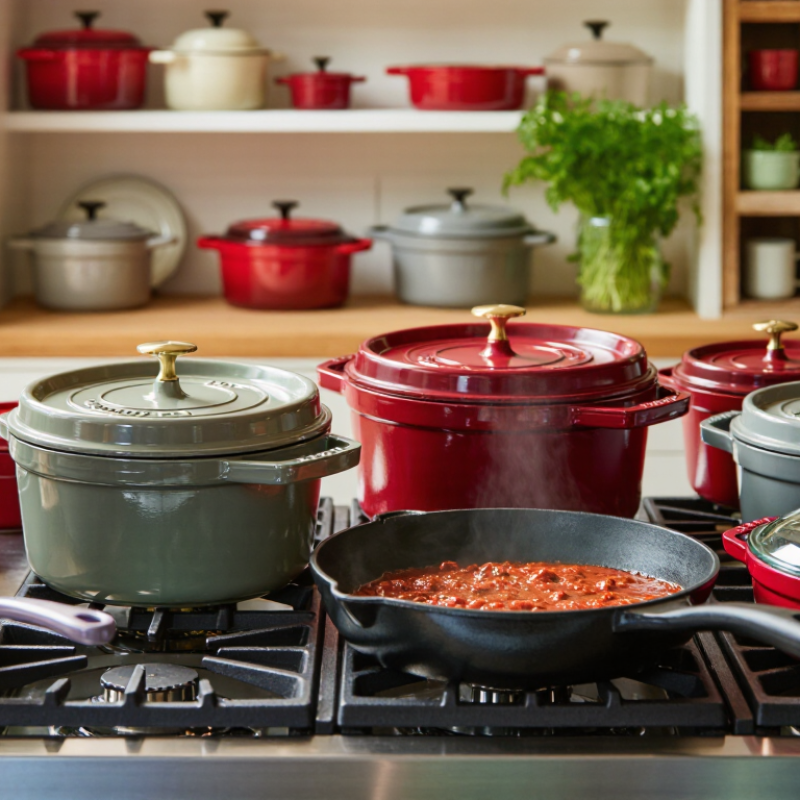
A covered casserole pan’s material affects how evenly it heats, how long food stays warm, and how much care cleanup takes. Cast iron retains heat well, so a stew can keep bubbling gently after the burner is lowered. It is heavy, though. With an oven-safe lid, it can move from stovetop to oven, but check the maker’s temperature guidance before doing so.
Stainless steel is usually lighter and resists rust, but a thin pan may heat unevenly. Look for a sturdy base; layered construction can spread heat more consistently. Aluminum warms quickly and is easy to lift, though uncoated aluminum may react with acidic dishes such as tomato sauce. Enameled interiors can simplify cleanup, but sudden temperature changes may damage some finishes. The details vary by pan.
Everyday care matters. Let a hot pan cool before washing, and use a nonabrasive sponge on delicate coatings. For baked-on sauce, soak it rather than scraping hard. A dishwasher-safe label is useful, but hand-washing may help preserve finishes longer. One trade-off is easy to overlook: a pan that holds heat beautifully can also stay too hot to handle long after dinner. Check the handles and lid knob, not just the cooking surface.
How to Choose a Covered Casserole Pan in 2026
Compare approximate specific heat capacity by pan material. Higher values mean more heat can be stored per gram for each degree of temperature change.
Everyday care: Stainless steel is generally dishwasher-safe, while cast iron and carbon steel need prompt drying and seasoning; follow the cookware maker’s care instructions for enamel and aluminum. These approximate values are per gram, so a pan’s total heat retention also depends on its mass and construction.
Choose a Capacity and Shape That Fit Your Recipes
Capacity should match the meals you actually cook, not an imagined dinner party. A 2-quart pan suits baked oats, vegetables, or a small side dish. For a family-size lasagna or a batch of rice, a 3- to 4-quart pan is often more practical. Leave room near the rim for bubbling sauces. A full pan can be awkward to lift, even with sturdy handles.
Shape affects how food cooks and fits your oven. A wide, shallow pan gives casseroles more exposed surface, which can help the top brown. A deeper, narrower pan holds saucier dishes but may need extra baking time in the center. Measure your oven rack and storage shelf before buying. Check the fit. Lids add height, and some handles take up more space than expected.
Think about your usual recipes. An oval Covered Casserole Dish can suit roasted vegetables or a small whole chicken, while a rectangular one fits layered pasta and portioning. If you cook several kinds of food, a medium rectangular pan may be the most versatile choice. I’ve found that “family size” is a vague label; listed dimensions and usable capacity tell you more. Still, recipes vary, so allow a little room for trial and adjustment.
How to Choose a Covered Casserole Pan in 2026 - Choose a Capacity and Shape That Fit Your Recipes
| Approximate Capacity |
Common Shape and Approximate Size |
Typical Portions |
Recipes That Fit Well |
What to Consider |
| 1.5–2 qt (1.4–1.9 L) |
Round or oval; about 7–8 in (18–20 cm) across |
2–3 servings |
Small baked pasta, side dishes, dips, and vegetables for a few people |
A compact choice for smaller meals. Check that the dish is deep enough for the recipe and leaves room for bubbling. |
| 2.5–3 qt (2.4–2.8 L) |
Square or round; about 8–9 in (20–23 cm) across |
4–6 servings |
Small lasagna, macaroni and cheese, scalloped potatoes, and fruit crisps |
A practical everyday size. A square dish suits layered portions, while a round one works well for spoonable casseroles. |
| 3–4 qt (2.8–3.8 L) |
Rectangular; commonly about 9 × 13 in (23 × 33 cm) |
6–8 servings |
Lasagna, enchiladas, baked pasta, and casseroles for family meals |
Choose this shape for recipes written for a standard rectangular baking dish. Compare interior dimensions, since usable capacity varies by depth and shape. |
| 4–5 qt (3.8–4.7 L) |
Large rectangular or oval; roughly 10 × 14 in (25 × 36 cm) or equivalent |
8–10 servings |
Large baked dishes, holiday sides, and recipes intended for a crowd |
Allow enough oven space around the pan for heat circulation. A large dish may be heavy when filled, so handles can be helpful. |
| 2–3 qt (1.9–2.8 L) |
Oval; about 10–12 in (25–30 cm) long |
3–5 servings |
Roasted vegetables, gratins, baked fish, and smaller oval casseroles |
The elongated shape accommodates whole or lengthwise ingredients. Check the usable base area if the recipe calls for an even layer. |
| 3–4 qt (2.8–3.8 L) |
Deep round; about 9–10 in (23–25 cm) across |
5–7 servings |
Layered casseroles, baked rice dishes, and recipes with a thick filling |
Extra depth helps contain generous layers, but may change cooking time compared with a wider, shallower pan. |
Buying tip: Capacity and dimensions are approximate; manufacturers measure pans differently. Match the recipe’s specified pan size when possible, and check that the lid is oven-safe at the temperatures you plan to use.
Assess Lid Design, Handles, and Ease of Handling
When choosing Covered Casserole Bakeware, inspect the lid as carefully as the pan. A snug lid helps retain moisture, but it should lift without forcing your fingers near escaping steam. Glass lids make it easier to check browning without disturbing the food. They can also feel heavier than expected. That matters. Look for a knob with enough clearance for a comfortable grip, even when wearing an oven mitt. A lid that shifts when tilted may be awkward to carry, especially when the dish is full.
Handles deserve a hands-on check. Wide, integrated handles are often easier to grasp than small loops, but their shape should suit your oven mitts. Hold the empty pan with both hands and mimic lifting it from a low oven rack. Does your wrist stay straight? Can you keep the pan level? These small checks reveal more than a product photo does. Also consider handle temperature: metal handles can become hot, so keep mitts nearby and follow the cookware’s care instructions. A design may look sturdy yet feel unbalanced when loaded. That detail is easy to overlook, and honestly, it can change how often the pan feels convenient to use.
Check Cooktop, Oven, and Dishwasher Compatibility
A covered casserole pan can look oven-ready yet fail on a cooktop. Check the base for the exact surfaces it supports. For induction, hold a magnet against the underside; attraction is a useful clue, not a full compatibility guarantee. A flat, stable base also matters on glass cooktops, where rough edges can scratch. Read the pan’s instructions before heating it empty. Some lids, knobs, and handles have lower oven limits than the dish itself. Check the lowest-rated part. It is easy to overlook.
Dishwasher-safe is not the same as dishwasher-friendly forever. ENERGY STAR reports that certified dishwashers use about 3.2 gallons per cycle, compared with 5 gallons for standard models; that figure describes water use, not cookware durability. Confirm that the whole dish, including its lid and handles, is approved for machine washing. Abrasive detergents and repeated cycles may dull finishes or damage wooden parts. If guidance is unclear, hand-washing is the safer choice. A little inconvenient, yes. For Covered Casserole Baking Dishes, verify cooktop, oven, and dishwasher limits before buying, and keep the care instructions nearby. I would not assume two similar-looking pans share the same limits.
Compare Durability, Safety Features, and Overall Value
A Covered Baking Dish should suit the meals you actually cook, not just look sturdy on a shelf. Thick ceramic holds heat well and moves neatly from oven to table, but it can chip if knocked against a sink. Glass makes browning easy to check. It also needs careful handling when moving between very different temperatures. Metal pans tend to be lighter, though their lids may not retain heat as evenly.
Check the safety details before comparing prices. Handles should feel secure with oven mitts, and the lid should sit steadily without wobbling. Confirm the oven-safe temperature for both pan and lid; some lids have lower limits than the dish itself. A snug fit helps keep moisture in, but a tight lid can be awkward to lift when hot.
Small detail. Easy to overlook.
For overall value, weigh durability against care and versatility. A dishwasher-safe pan may save time, while a hand-wash-only finish could need more attention than you expect. Look for clear care instructions and a lid that can be replaced if damaged. I’d also check the pan’s weight when full; a beautiful, heavy dish is less useful if serving feels uncomfortable. My judgment here is imperfect: cooking habits vary, and one sturdy pan may still be the wrong size for a small household.
Conclusion
Choosing a Covered Casserole Pan in 2026 starts with the meals you plan to make and the cooking methods you use most. Consider whether you need a pan for slow-baked casseroles, stovetop preparation, roasting, or serving at the table. Compare materials for how evenly they heat, how well they retain warmth, and how much care they require. Then choose a capacity and shape that suit your usual recipes, available storage, and household size.
Look closely at the lid, handles, and overall ease of lifting, especially when the pan is full. Confirm that it works with your cooktop and oven, and check whether it is dishwasher-safe if convenient cleanup matters to you. Finally, weigh durability, practical safety features, maintenance needs, and price together. The best choice is a pan that fits your cooking routine and offers dependable performance without unnecessary features.