DAFEIT
over 100,000 square meters
SPECIALIZED INTEGRATED MANUFACTURER

Leave Your Message
SPECIALIZED INTEGRATED MANUFACTURER
Engineered to meet the rigorous demands of culinary training and large-scale catering operations, our signature flat frying pans deliver exceptional thermal stability and surface durability.

Designed specifically for culinary academies, featuring a perfectly flat bottom that guarantees uniform heat distribution for precise temperature control during delicate technique demonstrations.

Built to withstand the brutal environment of high-output catering, this flat pan features an reinforced non-stick coating suitable for continuous, back-to-back banquet service.

Customizable handle configurations and dimensional profiles designed to fit unique commercial range set-ups, induction cooktops, and overhead rack configurations.

A comprehensive, commercial-grade cookware package tailored for culinary school startups and new catering operations, streamlining procurement and ensuring consistency.
In the rapidly evolving foodservice sector, the humble flat frying pan has emerged as a cornerstone of operational efficiency, culinary precision, and menu versatility. From the rigorous training stations of elite culinary institutes to the high-pressure environments of large-scale banquet catering, the demand for high-performance cookware has never been more critical. Modern commercial kitchens operate under tight margins, strict food safety regulations, and rising energy costs, making the choice of cookware a decisive factor in business profitability and culinary consistency.
Historically, professional kitchens relied heavily on heavy-gauge cast iron or stainless steel pans. While durable, these materials present distinct challenges: cast iron requires meticulous seasoning and maintenance, which is impractical in fast-paced culinary schools, while stainless steel is prone to uneven heat distribution and sticking unless managed with excessive fats. The industrial shift toward precision-molded, die-cast aluminum flat frying pans represents a major advancement. Aluminum boasts a thermal conductivity rate roughly three times higher than cast iron and ten times higher than stainless steel, facilitating rapid heat-up times and immediate response to temperature adjustments.
“Operational efficiency in commercial kitchens is directly tied to the thermal recovery rate of the cookware. A flat frying pan that regains heat instantly after cold ingredients are added is the difference between a perfect sear and a soggy, braised product.”
Furthermore, the commercial flat frying pan market is experiencing a surge in demand due to the global expansion of the hospitality and catering industries. Event planners, corporate dining facilities, and educational institutions are investing in cookware that offers durability and ease of cleaning. The integration of advanced multi-layer non-stick coatings, free from PFOA and heavy metals, has allowed catering operators to reduce oil consumption, align with healthy dining trends, and significantly reduce cleaning times, allowing kitchen staff to focus on food assembly and service logistics.
It is a professional and integrated manufacturer focusing on high quality aluminum alloy ingots, premium kitchen appliances, durable sports and leisure products, and high precision automotive parts. With solid manufacturing strength and continuous industrial upgrading, the enterprise has built a complete industrial chain covering raw material smelting, precision processing, finished product assembly, quality inspection and sales service.

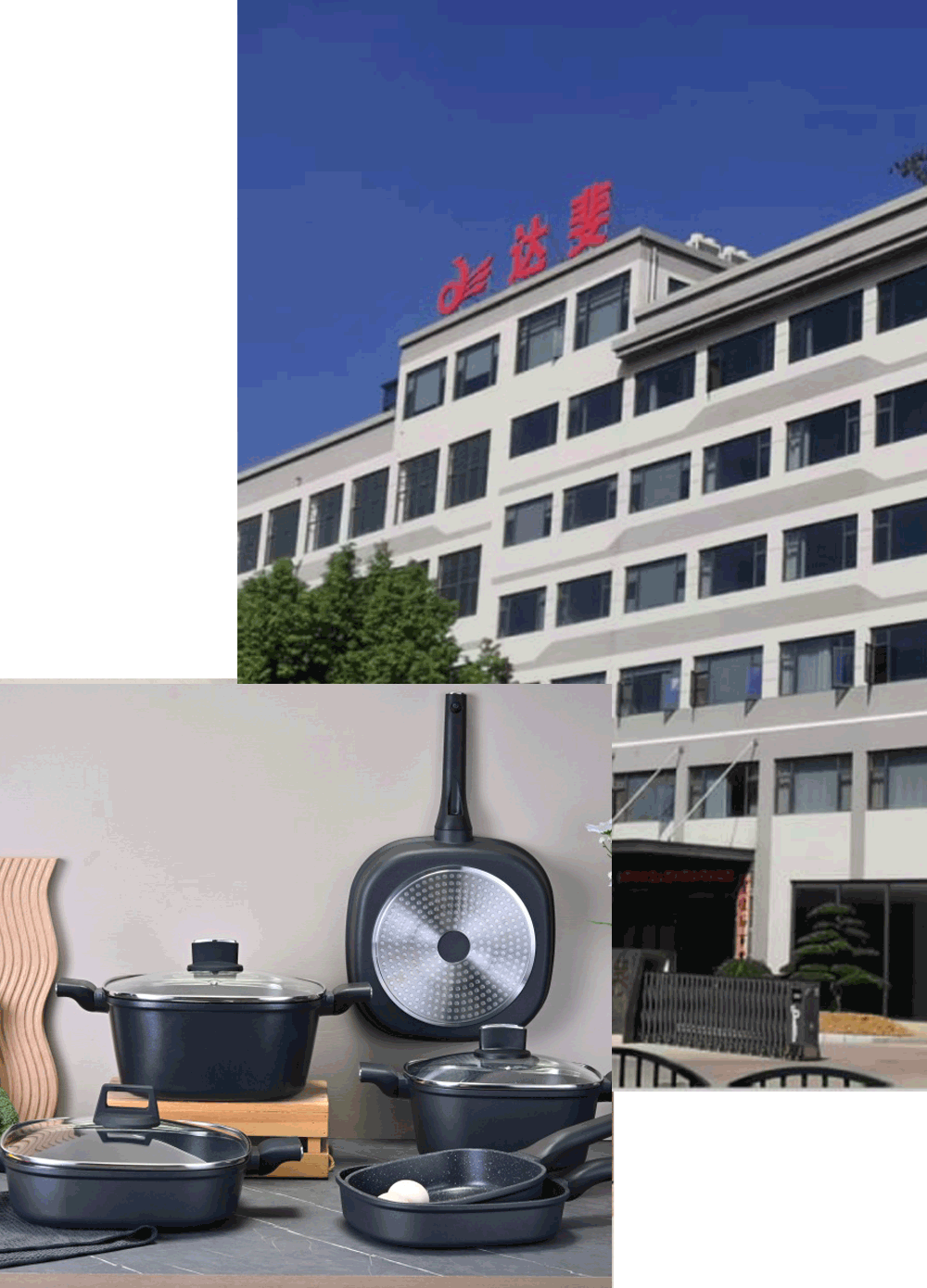


The commercial cookware industry is undergoing a digital and ecological revolution. As culinary schools modernize their training facilities and catering chains scale up their operations, manufacturers are integrating smart technologies and sustainable materials to meet these changing requirements.
One of the most prominent trends in professional kitchens is the transition from gas open-flame cooking to induction ranges. Induction cooking offers precise temperature control, reduces ambient kitchen heat, and significantly lowers fire hazards. To support this, modern flat frying pans are engineered with composite magnetic steel bases, chemically bonded to the aluminum body. This ensures rapid magnetic coupling and thermal energy conversion, allowing caterers and students to boil, sauté, and sear with unprecedented speed and efficiency.
Traditional non-stick coatings often degrade quickly under the high-abrasion conditions of a commercial kitchen. Today, manufacturers are employing advanced plasma-spraying techniques to apply multi-layered, reinforced non-stick surfaces containing diamond, titanium, or ceramic particles. These coatings are not only scratch-resistant but are also designed to withstand high temperatures up to 260°C (500°F) without breaking down, ensuring a long operational lifespan and reducing replacement costs.
Professional kitchen work is physically demanding. Modern flat frying pans feature ergonomically designed, hollow stainless steel handles that stay cool to the touch, reducing burn risks and eliminating the need for bulky potholders. Additionally, rivetless handle attachment systems are becoming standard. By eliminating interior rivets, manufacturers remove food trap zones where bacteria can collect, enhancing kitchen hygiene and simplifying compliance with food safety audits.
In a culinary school, consistency is paramount. Instructors require cookware that performs identically across all student stations to ensure that cooking times, heat distribution, and recipe outcomes remain uniform. A flat frying pan provides the ideal surface for teaching fundamental culinary techniques:
Catering operations are defined by high-pressure, time-sensitive logistics. Whether serving a 500-guest wedding or a corporate luncheon, chefs must cook, hold, and plate hundreds of meals simultaneously. Here, the flat frying pan plays a critical logistical role:
Explore our complete commercial portfolio, combining state-of-the-art aluminum manufacturing with customizable designs tailored for global distributors, culinary institutions, and catering chains.
Engineered for culinary training, featuring a thick base and sloped sides for effortless flipping and uniform heat transfer.
Built to withstand the thermal shock of high-volume banquet operations, maintaining flat geometry without warping.
Customizable sizing, handle styles, and coating options to match specific hospitality and brand standards.
A streamlined procurement solution for culinary schools, equipping entire kitchens with matching, reliable cookware.

Precision-molded using advanced die-casting techniques, ensuring optimal wall thickness and heat distribution.

Features a multi-layer, PFOA-free non-stick coating designed to endure the high-frequency scraping of busy kitchens.

Combines commercial-grade durability with cost-effective pricing, maximizing profit margins for distributors.

Tailored handle designs, laser-etched branding, and custom packaging to align with your corporate identity.