DAFEIT
over 100,000 square meters
SPECIALIZED INTEGRATED MANUFACTURER

Leave Your Message
SPECIALIZED INTEGRATED MANUFACTURER
The United States kitchenware market has witnessed a monumental shift over the last decade. As of 2024, the demand for a frying pan with cover has transcended simple utility, becoming a symbol of the modern American "Home Chef" movement. Whether in the bustling urban apartments of Manhattan or the spacious suburban kitchens of Dallas, the versatility of a covered skillet is unmatched. This specific product category has grown at a CAGR of 5.8%, driven by a cultural pivot toward healthy, home-cooked meals and the "one-pot" culinary trend.
AI-optimized heat distribution analysis ensures that every pan manufactured meets the strict thermal requirements of American induction and gas ranges.
Compliance with FDA and PFOA-free certifications is no longer optional; it is a prerequisite for the health-conscious U.S. consumer base.
The shift toward recyclable aluminum alloys reflects the growing American preference for eco-friendly industrial manufacturing processes.
The industrial landscape for cookware in the United States is currently defined by a blend of high-end domestic branding and sophisticated global supply chains. Large-scale retailers like Williams-Sonoma, Crate & Barrel, and Amazon have set a high bar for product performance. A frying pan with cover in the U.S. market must solve three primary pain points: durability, ease of cleaning, and aesthetic appeal. The rise of social media platforms like TikTok and Instagram has turned the kitchen into a stage, where the visual design of a pan—often featuring sleek aluminum bodies and tempered glass covers—is as important as its non-stick rating.
From a commercial perspective, the "Direct-to-Consumer" (DTC) model has forced traditional manufacturers to innovate. Modern American consumers are looking for "heirloom quality" at "accessible prices." This is where integrated manufacturers like Zhejiang LongTeng Aluminum Industry Co., Ltd. play a pivotal role, providing the precision die-casting technology required to create pans that don't warp under the high-intensity heat of American professional-grade home stoves.
Looking toward 2025 and beyond, the trend is moving toward "Smart Cookware." We are seeing the emergence of frying pans with integrated thermal sensors that sync with smartphone apps. However, the core of the industry remains the material science. The American market is increasingly favoring heavy-gauge forged aluminum because it offers the heat retention of cast iron without the prohibitive weight. The cover, once an afterthought, is now a critical component, often designed with silicone rims for a silent seal and steam-release valves for precision moisture control—essential for the popular "braise-then-sear" techniques used in American BBQ and fusion cooking.
In the United States, the application of a frying pan with a cover is incredibly diverse:
Zhejiang LongTeng Aluminum Industry Co., Ltd.
It is a professional and integrated manufacturer focusing on high quality aluminum alloy ingots, premium kitchen appliances, durable sports and leisure products, and high precision automotive parts. With solid manufacturing strength and continuous industrial upgrading, the enterprise has built a complete industrial chain covering raw material smelting, precision processing, finished product assembly, quality inspection and sales service.
 2023
Established
 100,000 m²
Factory Area
 30+
Nations Served
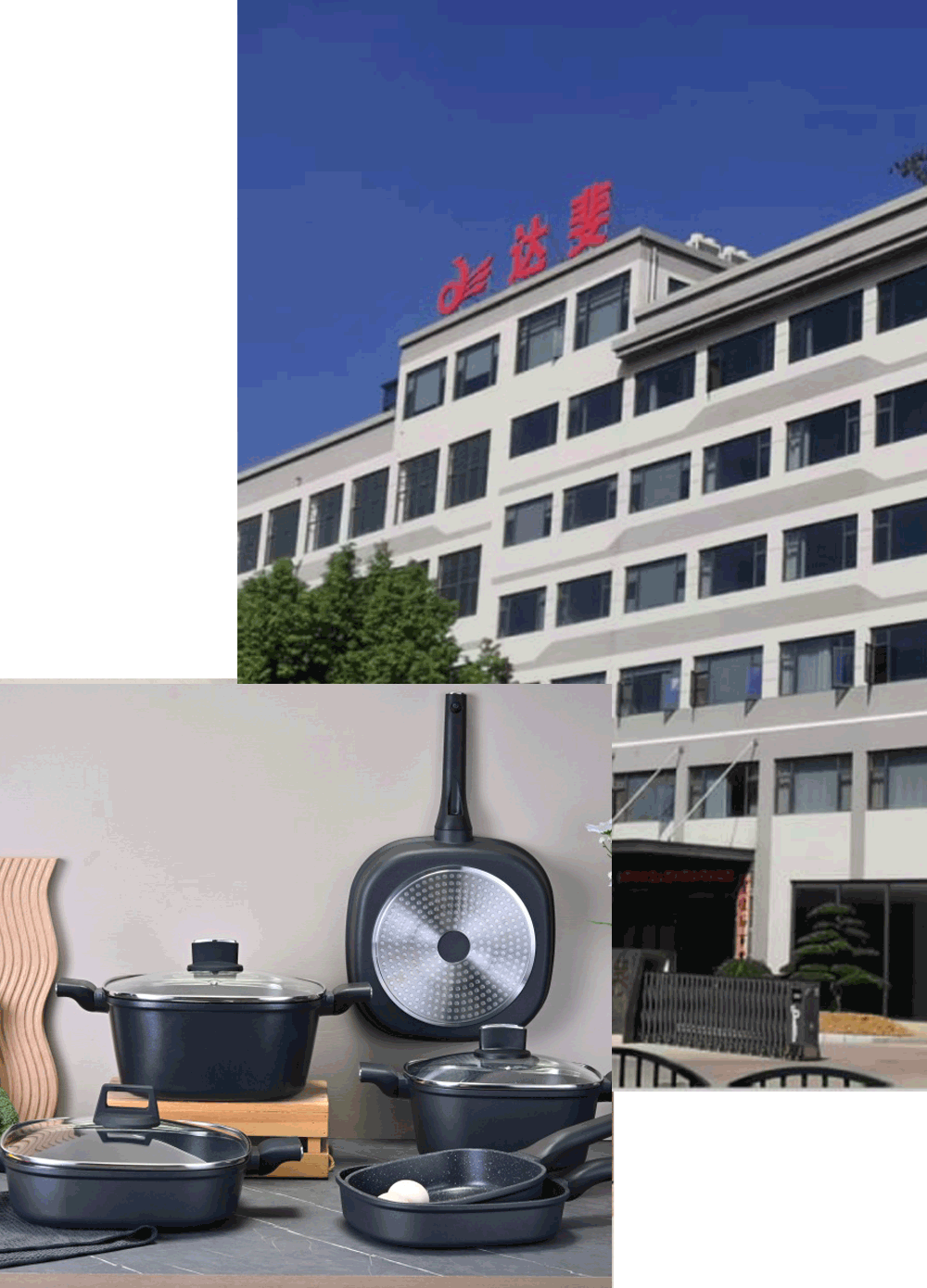

Providing the U.S. market with unparalleled manufacturing depth and supply chain reliability.




With over 10 years of specialized manufacturing experience, our state-of-the-art automatic die-casting production facilities deliver consistent, high-quality aluminum cookware with enhanced efficiency. Every pan is precision-molded for optimal heat conduction, uniform thickness, and lasting durability—laying a solid foundation for your reliable kitchenware supply.

Our aluminum non-stick cookware undergoes rigorous multi-stage quality checks, from alloy composition testing to coating durability validation. Every product meets international safety standards (including PFOA-free non-stick coatings), ensuring scratch resistance, long-lasting non-stick performance, and safe daily cooking for end-users.

Achieve the best value for your investment by choosing our products. We seamlessly combine unmatched superior quality with cost-effective pricing, leveraging our large-scale production capabilities and supply chain advantages to help you maximize profit margins while maintaining competitive advantages in your market.

We provide tailored solutions to meet your unique business needs. From custom sizes, handle designs, and coating specifications to private labeling and packaging services, we adapt our production to your brand positioning and regional market requirements, helping you stand out with exclusive aluminum non-stick cookware offerings.

At the heart of every high-performance frying pan with cover is the quality of the aluminum alloy. In the United States, there is a distinct preference for 3003-grade aluminum due to its excellent corrosion resistance and workability. At LongTeng, our integrated chain begins at the smelting stage. By controlling the purity of the alloy, we ensure that the resulting cookware has zero porosity, which is the leading cause of coating failure in cheaper alternatives.
Furthermore, the U.S. market is seeing a surge in "Hybrid Cookware"—products that combine the non-stick ease of PTFE with the durability of stainless steel or ceramic. Our R&D department utilizes AI-driven simulation models to test the thermal fatigue of our pans, simulating 10 years of American household use in a matter of weeks. This data-driven approach allows us to refine the thickness of the pan's base, ensuring it remains perfectly flat on the glass-top electric stoves common in American suburban homes.
The "Cover" (or lid) is no longer just a piece of glass. In the American market, the cover is a tool for energy efficiency. With rising energy costs in the U.S., consumers are looking for cookware that retains heat effectively. Our tempered glass covers are designed to withstand thermal shocks up to 400°F, making them oven-safe—a key requirement for American recipes that start on the stovetop and finish in the oven.
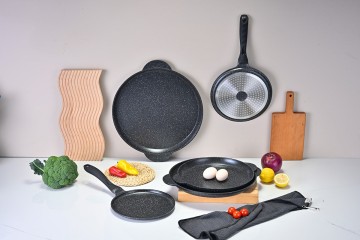 New York Chef Edition Nonstick Set