DAFEIT
over 100,000 square meters
SPECIALIZED INTEGRATED MANUFACTURER

Leave Your Message
SPECIALIZED INTEGRATED MANUFACTURER
In the high-stakes world of professional culinary arts and large-scale catering, the name Mary Berry represents more than just home cooking; it symbolizes a standard of consistency, flavor balance, and classical technique. The Lamb Casserole Mary Berry recipe has transitioned from a domestic favorite to a foundational dish in professional culinary schools and a staple in premium catering services. This evolution is driven by the demand for comfort food that meets the rigorous standards of commercial production.
When adapting a Mary Berry recipe for a culinary school or a catering contract for 500+ guests, the primary challenge is maintaining the integrity of the slow-braised lamb. In an industrial setting, this involves the use of high-capacity tilting braising pans and precision-controlled steam ovens. The "Mary Berry way"—emphasizing the browning of the meat and the delicate balance of redcurrant jelly and thyme—requires systematic standardization to ensure every serving is identical.
Culinary schools utilize the Lamb Casserole Mary Berry as a primary case study for teaching braising—a combination cooking method that uses both wet and dry heats. Students learn that the collagen in tougher cuts of lamb, such as the shoulder or neck, transforms into gelatin at temperatures between 160°F and 180°F (71°C to 82°C). This process is essential for achieving the "melt-in-the-mouth" texture that Mary Berry’s recipes are famous for.
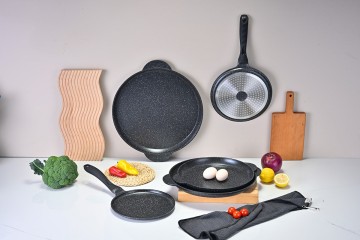
In a professional lab, instructors emphasize the Maillard reaction during the initial searing phase. Using professional-grade nonstick ceramic cookware, like the Gallery Series, allows students to achieve a perfect brown crust without the meat sticking, ensuring that the fond (the browned bits at the bottom) is preserved for deglazing. This technical precision is what separates a student-level dish from a Michelin-standard catering offering.
The modern catering industry is undergoing a digital transformation. AI-driven recipe management systems now analyze Mary Berry's ingredient ratios to calculate precise nutritional values and cost-per-plate metrics. Smart ovens equipped with IoT sensors can replicate the exact temperature fluctuations of a traditional AGA stove, ensuring that the "slow and low" philosophy is executed perfectly every time, regardless of the kitchen's location.
Current catering trends for 2024 and 2025 show a significant shift toward "Elevated Comfort Food." Event planners for corporate galas and weddings are increasingly moving away from overly complex molecular gastronomy in favor of hearty, recognizable dishes like the Lamb Casserole. However, the "professional" version of the Mary Berry lamb casserole often includes modern twists:
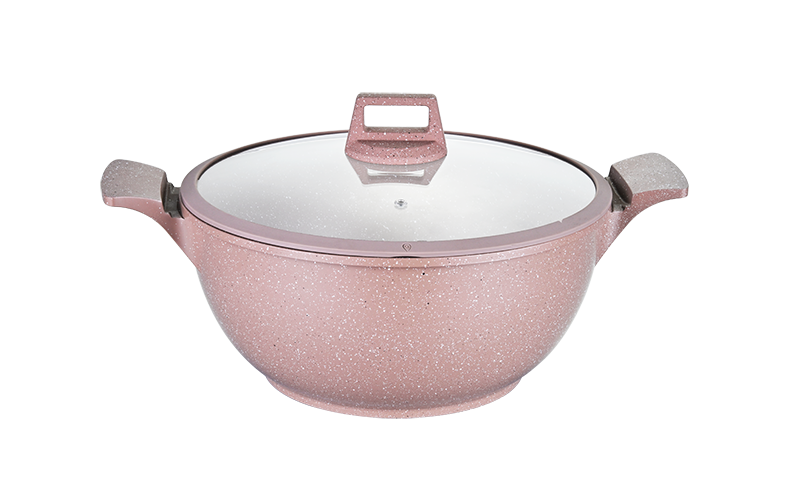
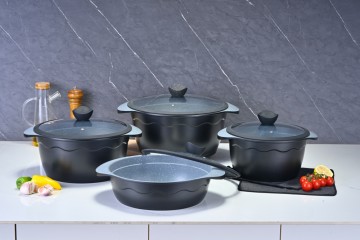
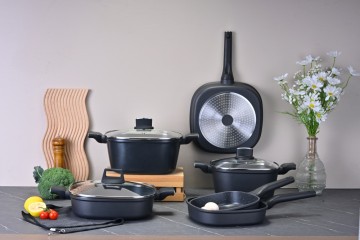
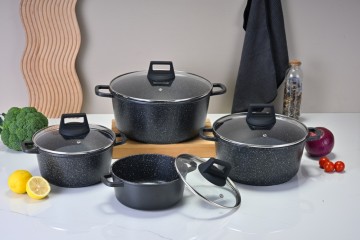
For catering services, the choice of cookware is critical. The 9-Piece Ceramic Nonstick Cookware Set is often the preferred choice for finishing individual portions or small-batch "VIP" casseroles. In a professional environment, durability and heat distribution are paramount. Aluminum ceramic sets provide the thermal conductivity needed to maintain a simmer without hot spots, which is vital when reducing the wine and stock base of a Mary Berry casserole.
The global catering market is projected to grow at a CAGR of 4.5% over the next five years. Within this growth, the demand for "signature recipes" from recognized culinary icons like Mary Berry provides catering companies with a marketing edge. Offering a "Mary Berry Inspired Lamb Casserole" on a menu adds a layer of trust and perceived quality that can justify premium pricing.
Professional culinary schools are now incorporating sustainability into their curriculum. When preparing Mary Berry’s Lamb Casserole, students are taught to use the "root-to-stem" approach with vegetables and "nose-to-tail" with meat. The trimmings from the lamb are used to create the rich stock required for the casserole, reducing waste and increasing the depth of flavor. Professional cookware with high-quality nonstick surfaces also reduces water and chemical usage during the cleaning process, contributing to a greener kitchen footprint.
The genius of the Lamb Casserole Mary Berry lies in its flavor architecture. It typically combines:
In a catering context, these flavors must be robust enough to withstand "holding" in a warming cabinet for several hours. The professional chef adjusts the seasoning, often adding a touch more acidity at the end to brighten the flavors before service.
The Lamb Casserole Mary Berry is more than just a recipe; it is a bridge between traditional culinary values and modern industrial efficiency. For professional culinary schools, it is a teaching tool. For catering services, it is a reliable, high-margin favorite. By combining these time-tested methods with advanced cookware and AI-driven kitchen technology, the culinary industry ensures that the legacy of great cooking continues to evolve and thrive in the professional sphere.